Jun 09 2010

My 9-year-old son’s list of daily tasks is pretty brief. Make your bed. Feed the dog. Do your homework. Pick up after yourself.
Simple stuff.
If we lived in Uzbekistan, it could be a different story.
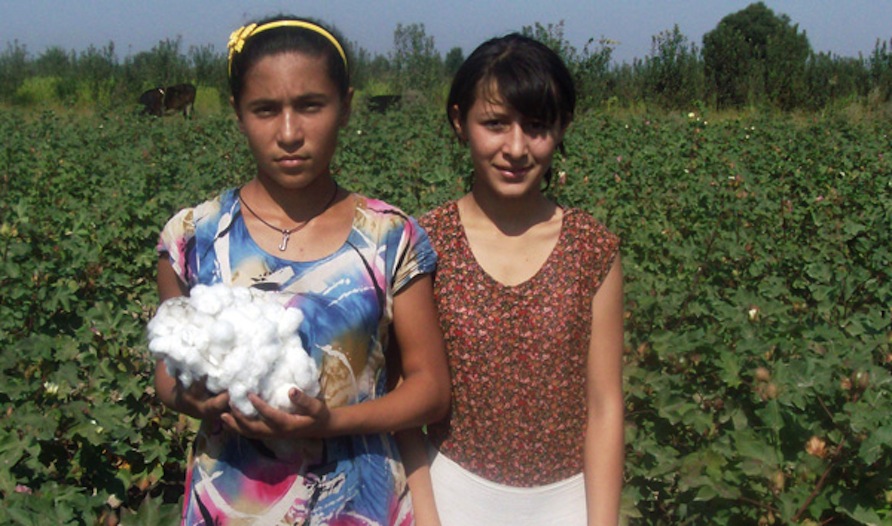
Each fall, the Uzbekistan government closes schools and forces more than one million children to work in the country’s cotton fields.
This is child labor, driven not by poverty, but by government policy.
And why? It earns the government more than $1 billion annually.
Tomorrow, June 12, is World Day Against Child Labor. If you’re a citizen of the developed world, it may seem like a distant problem. But remember what’s happening in Uzbekistan … and think about what happens with cotton once harvested.
It’s often made into clothing – like khakis, shirts and jeans.
That brief list of products should tell you why Levi Strauss & Co. cares about what’s happening in Uzbekistan: We don’t want cotton textiles made with child labor used in our products. That’s why we’ve prohibited the use of cotton from Uzbekistan since 2008, when credible sources brought this issue to our attention.
We were the first U.S. apparel brand and/or retailer to prohibit the use of Uzbek cotton in its supply chain, and we’re proud that others have joined us.
But the fact is prohibiting the use of Uzbek cotton in our products is difficult to verify. As a commodity, cotton is challenging to trace as it moves from farm to textile mill to garment factory. We’re working closely with experts in supply chain traceability to address this challenge. It’s important to us as a company, to those of us who work here, and to our customers.
My uncle was a cotton farmer in West Texas. It’s difficult, backbreaking work – for an adult. From my perspective, forcing children to do this kind of hard labor is cruel, especially when you’re depriving them of an education in the process.
Our hope at Levi Strauss & Co. is that, with mounting international awareness and advocacy, we will see real change by the Uzbek government to end the practice of forced child labor in Uzbekistan.
As my son grows, his daily chores will change. Still, he and I can both be thankful that his tasks will never be anything like those currently faced by the children in the cotton fields of Uzbekistan.
Posted By: Cory Warren, Editor, LS&Co. Unzipped |
|
Tags: Social Responsibility |
|
We welcome your comments.
When submitting a blog comment, please consider the following guidelines:
This is a moderated blog. Each comment will be reviewed. We reserve the right not to post your submission if it’s off-topic or contains any of the following types of content or violates other guidelines:
In addition, if you wish to share feedback with us about product selection, pricing, ordering, delivery or other customer service issues, please do not submit this feedback through this blog. Instead, contact us here.
Before posting your comment, please read the Blog Guidelines.
Dim (not verified) - Nov 27 2011
Well, I know where I'm shopping next. Levis just made the top of my list.
Sam Ellens (not verified) - Jul 30 2011
Good on you, Levi's. Also saw your NY gay marriage ad recently - it's nice to see a corporation take a public stand for human rights.
Radhika Jain (not verified) - Jul 18 2011
As a Human being- we do realize Childhood needs the most nuturing and caring - Why then FORCED CHILD labour exist is Sad! To know our Company has taken a strong stand is re- aasuring and hope this inspires other large organizations also take a step. Thank you LEVIS!!
Rashmitha Reddy Matta (not verified) - Feb 13 2011
I am an MBA student. For my CSR course, I have chosen to study Levi Strauss for labor policies. Coming from a developing country where child labor, high unemployment, labor exploitation is still common, I am touched by this bold move by Levi Strauss. If businesses that comprise a larger and more powerful part of the society initiate such social movements in spite of cannibalized profit margins, such actions will inevitably mobilize industry peers and young professionals. I hope Uzbekistan Govt soon realizes that it is inhibiting its own growth!
Charlie Fields - Levi's Consumer Relations (not verified) - Jun 14 2010
according to the Environmental Justice Foundation, forced child labor is just ONE of the problems of Uzbek cotton. http://www.ejfoundation.org/page142.html Others include excessive pesticide use, government misappropriation of the profits, and a great deal of ecological damage from depletion of the Aral Sea. Very sad.
Erik Autor (not verified) - Jun 11 2010
I am writing as an executive with the National Retail Federation, the trade association in Washington, DC representing the retail industry, US retailers are very disturbed by the situation in Uzbekistan, and are actively working with labor NGOs in North America and Europe to end this deplorable situation.
Post new comment
Before posting your comment, please read the Blog Guidelines.