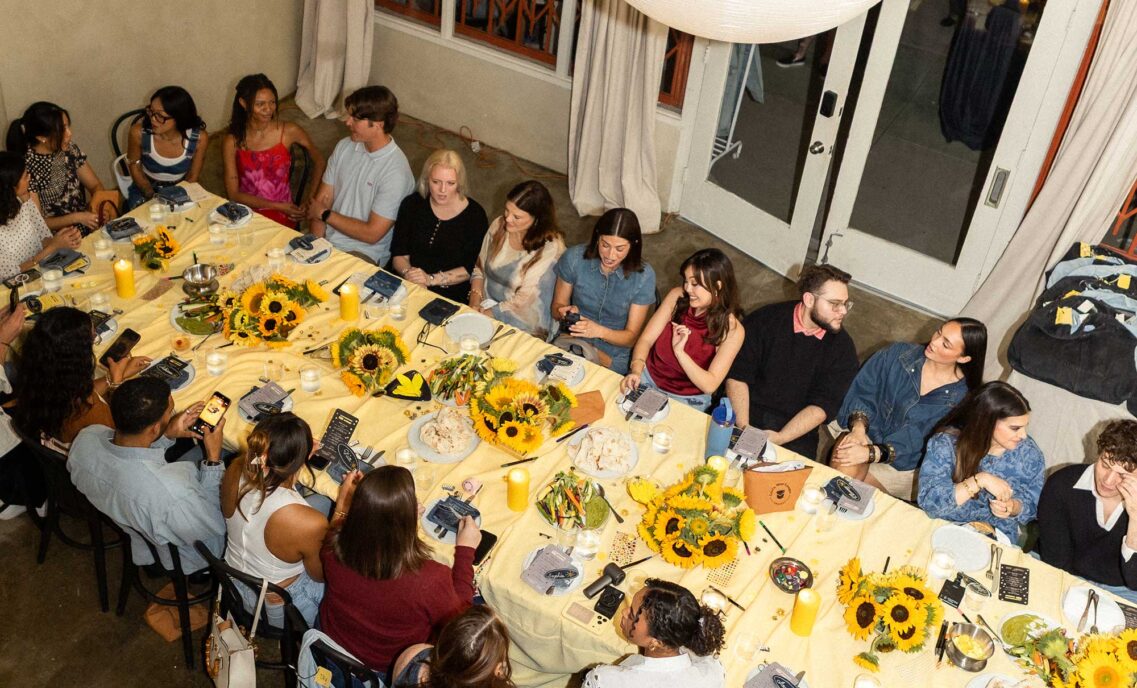
It’s a cherished tradition: families and friends gathering for a meal on Sunday nights. It’s where people can be themselves, share what’s on their minds, laugh, commune and debate. This year, ahead of the midterm elections in the U.S., Pastor Michael McBride — or “Pastor Mike” as he’s more often known — is leaning on that tradition to bring communities closer together.
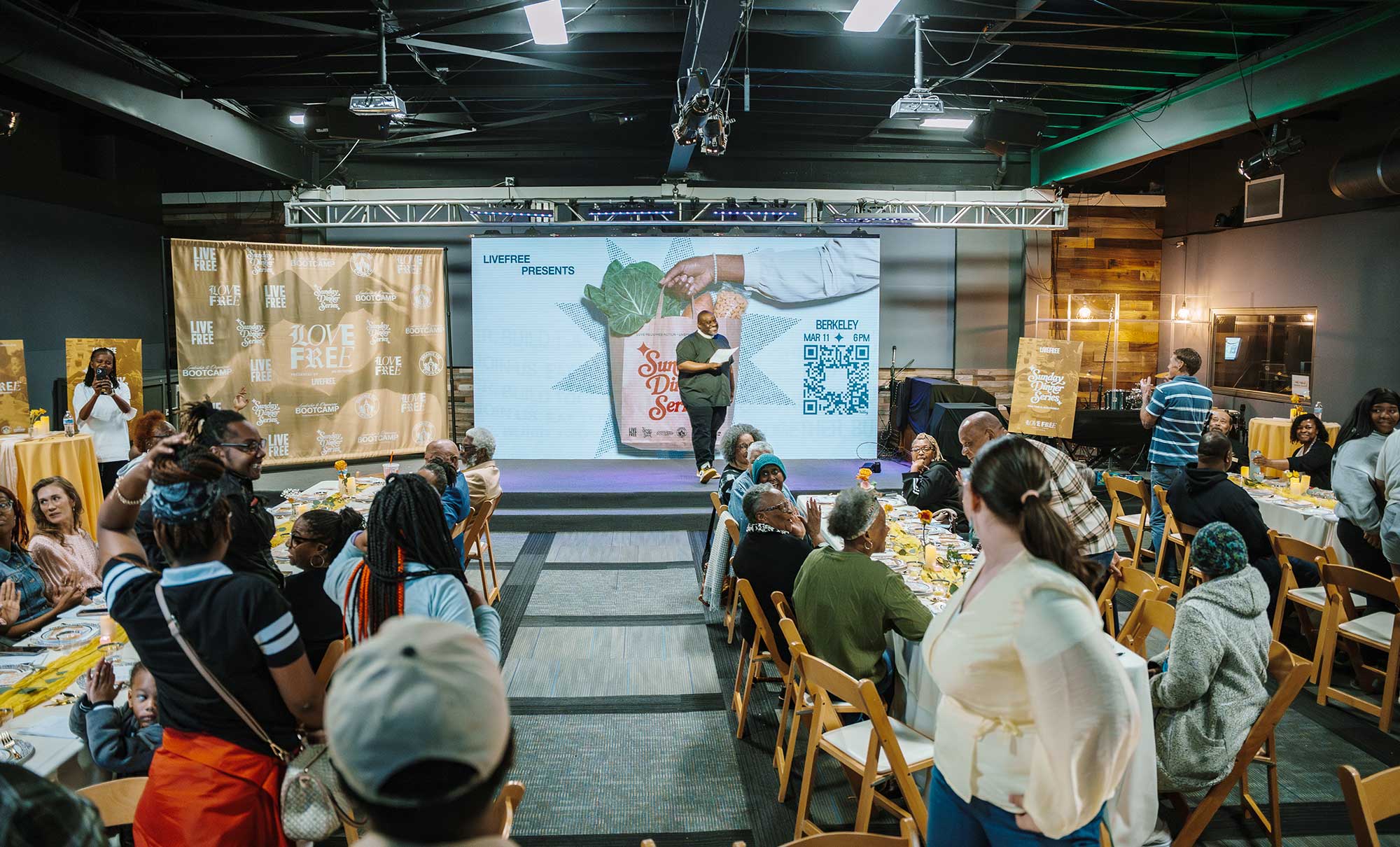
A longtime Levi Strauss Foundation (LSF) grantee, Pastor Mike is the executive director of LIVE FREE USA, an Oakland-based nonprofit focused on gun violence prevention, criminal justice and civic participation. This year, as part of its own work on democracy, LSF is sponsoring LIVE FREE’s Sunday Dinner series, which has now brought together community members in more than 15 states across the country.
We caught up with Pastor Mike recently to hear what he’s learning around those tables and why he thinks an old tradition fits this moment.
Your relationship with LSF goes back to 2016. How has your partnership evolved, and how did that lead to the Sunday Dinner series?
The first phase of our partnership was grounded in leadership development and supporting our work on gun violence, mass criminalization and voter suppression. Over the past decade, we have built on that foundation by developing trusted relationships among leaders, families and community members who aren’t always connected or may not always see eye to eye. Our Sunday Dinners give us an opportunity to bring those communities together in conversation and imagine what the future might look like, which is not always easy to do, especially now. That to me is the fullest expression of what we’ve been building toward.
Your work includes talking to people with a wide range of views. How does breaking bread help bring people together during an election year without things getting divisive?
The tradition of Sunday dinners resonates with all of us who recall meeting at big mama’s house on a Sunday after church. It did not require everyone to believe the same thing, dress the same way or be 100% unified to gather. What drew us together was the table. The food. The conversations. The laughter. Making memories and finding meaning together.
Right now, our society is the most divided I’ve seen in my lifetime. Through our Sunday Dinners, we’re trying to center our collective humanity and shared pain. We hope that the Sunday Dinners are a beginning, not an end, to conversations both within our own communities and beyond our circle of influence, both during this election cycle and long after it.
Much of your work is with communities that have often felt the system wasn’t built for them. What do you say to someone who doesn’t see the point in voting?
My initial response is not to react with condemnation or shame, but to listen and lean in more deeply to understand their perspective. I think it is important to acknowledge how let down and abandoned many people feel by their elected officials, and why they might feel robbed of their confidence that engaging in the civic process can change their daily conditions. This is why we gather to eat, break bread, dream together and eventually hit the streets, neighborhoods, community centers and blocks that are least likely to be engaged. It reminds people of their act of self determination, that they can make their voices heard through voting as we continue to struggle for justice, freedom and human dignity.
Early voting is underway in many states, and Election Day is November 3. What’s one thing you’d ask readers to do between now and then?
The first thing I would hope all readers do is go to Vote.org and check your local rules around early voting and go out to vote early. Aside from avoiding long lines, voting early allows you to support others on Election Day by giving people rides to the polls, showing up at polling places to provide an extra pair of hands or eyes, and ensuring our civic duty is done at the highest level.
What gives you hope as you talk to people around the country?
In spite of the divisiveness, many people of different ages, demographics, racial backgrounds and geographic centers are showing up across the U.S. I am inspired by the young people in the South who have taken voter education and mobilization up on their own and creatively found ways to get to the polling place. We’ve seen young people hosting ballot parties, yoga classes, line dancing, rallies, football watch parties, justice revivals, door knocking, canvassing and phone banking: all kinds of activities to make sure their communities get out and vote. It keeps me encouraged — as Dr. Martin Luther King Jr. said, the arc of the moral universe is long, but it bends toward justice.