We need to talk about the fact that we’re talking less.
Research shows that Americans speak roughly 338 fewer words a day each year, and only about one in six Americans say they feel comfortable talking about politics with anyone.
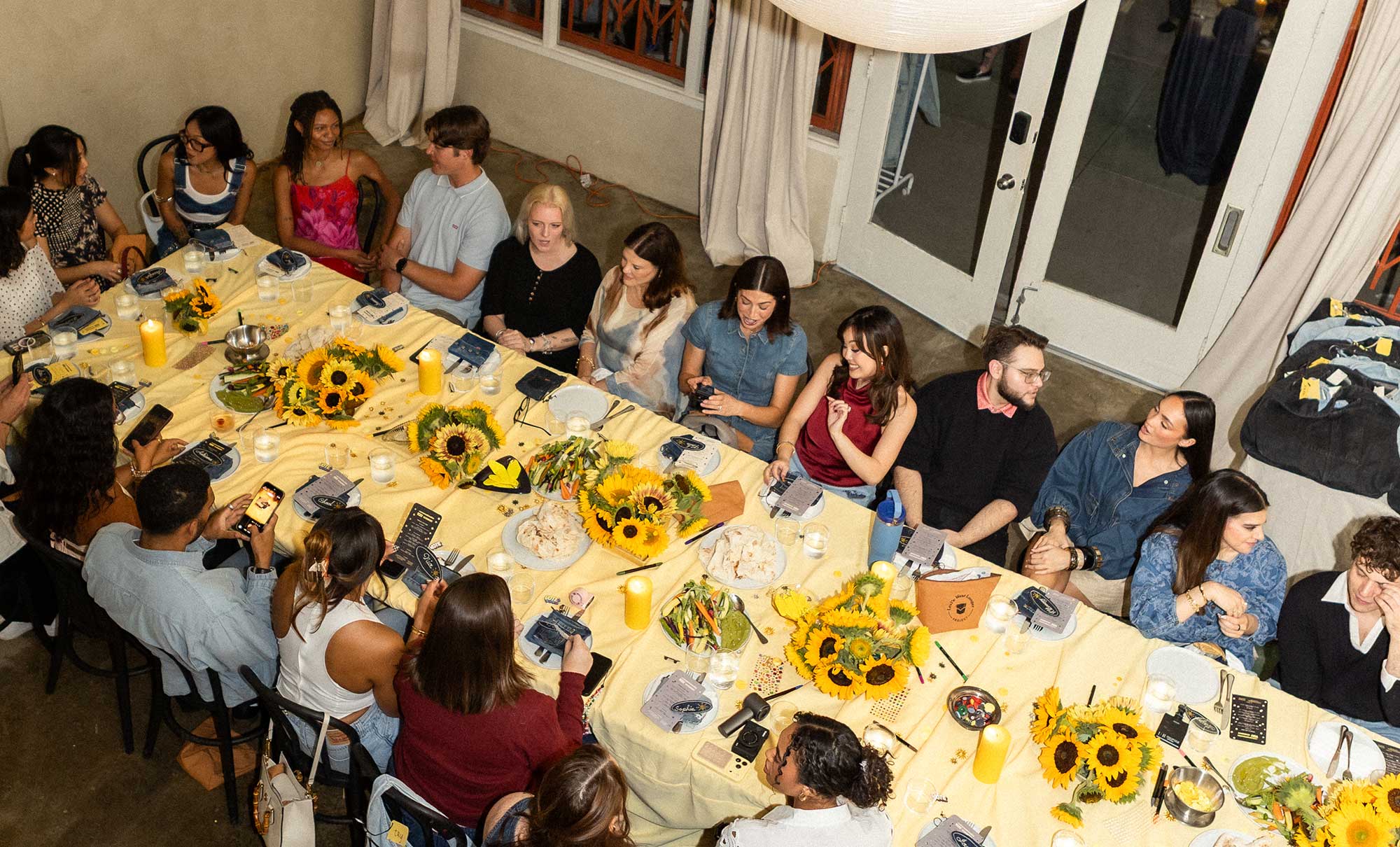
That’s why Levi Strauss & Co. teamed up with Sophie Beren, founder of The Conversationalist, to host a dinner series called Common Thread this fall. The dinners bring people together for a shared meal and facilitated conversations designed to build connection and understanding across different perspectives, including how to start a conversation with someone who votes differently than you. Our nonprofit partner, HeadCount, was also on hand to help guests register to vote.
We caught up with Sophie ahead of Vote Early Day in the U.S. to hear what has stuck with her from these conversations and her partnership with LS&Co. Here’s what she said.
Editor’s note: Want the TL;DR version? Watch the video below.
Why did it make sense to team up with LS&Co. on this initiative during a midterm year?
Midterms can be a time when many of us go quiet with the people we love, because silence feels safer than a fight. At The Conversationalist, we help people navigate the conversations that matter most, and a conversation is one of the most powerful civic tools we have: a text from a friend can increase someone’s likelihood to vote by 8.3 percentage points. Few brands are worn, repaired and handed down by people from every walk of life the way Levi’s® is. That’s a common thread in the most literal sense, and a natural home for a conversation about what connects us.
When people tell you about conversations with someone who sees things differently from them, what do you hear most often?
“I just don’t get how they could think that,” and, more and more, “If our morals don’t align, I can’t have them in my life.”
It feels personal when a disagreement touches what we believe is right and wrong. But underneath it is almost always fear: of losing the relationship, of being judged, of finding out the gap is bigger than we hoped. The goal is to understand how that person came to see the world the way they do, not to change their mind. When you get curious about the why, you reach what I call an “Echo Chamber Breaking Moment,” and you often find the values underneath aren’t as far apart as the opinions on top.
Each dinner paired conversations with hands-on activities inspired by the Levi’s® Wear Longer Project. Did that help the conversations, and did anything surprise you?
Sewing is the great equalizer. It puts everyone on the same playing field, and for those few minutes, nobody is defined by their opinions. They’re just two people working on something side by side. That was super intentional. Doing something out of your comfort zone together gets the “hard stuff” out of the way first so everyone really gets to know each other before we dive into the deeper conversations around voting. By the time guests came back to the table, those conversations felt so much easier.
What still surprises me is how often a pair comes running up to me with a connection I never could have anticipated. At one dinner, one guest figured out that her sewing partner was her mom’s neighbor. I research everyone ahead of time to make sure the people in each pair don’t already know each other and will likely have a lot in common, and that’s the best thing that happens when you take the time to uncover common ground — there’s always more to uncover!
Vote Early Day is Saturday, October 24. What advice do you have for someone who wants to talk with friends or family about the election but is hesitant because they may not agree?
I want everyone to know that being hesitant is so normal. It can be scary to talk to someone you think is voting differently than you, which is exactly why I built a tool to help you through it, step by step: my S.U.N. Framework, which stands for See, Understand and Navigate.
First, see. See both the other person and your own perspective clearly by separating what you actually know about them from the story you’ve told yourself.
Then, understand. Now that you can see the forest through the trees, ask questions to understand them and their perspective deeply: what they care about most and how they came to their views. Listen to learn, not to reply.
Finally, navigate the need, whether that’s agreeing to disagree or simply saying, “I’m voting early on the 24th. Want to go together?” You don’t have to fill out the same ballot to walk into the polling place side by side.
And remember, you don’t need the perfect words to start the conversation. But if you need a little help, LS&Co., HeadCount and The Conversationalist co-developed a toolkit you can use to help get you started.