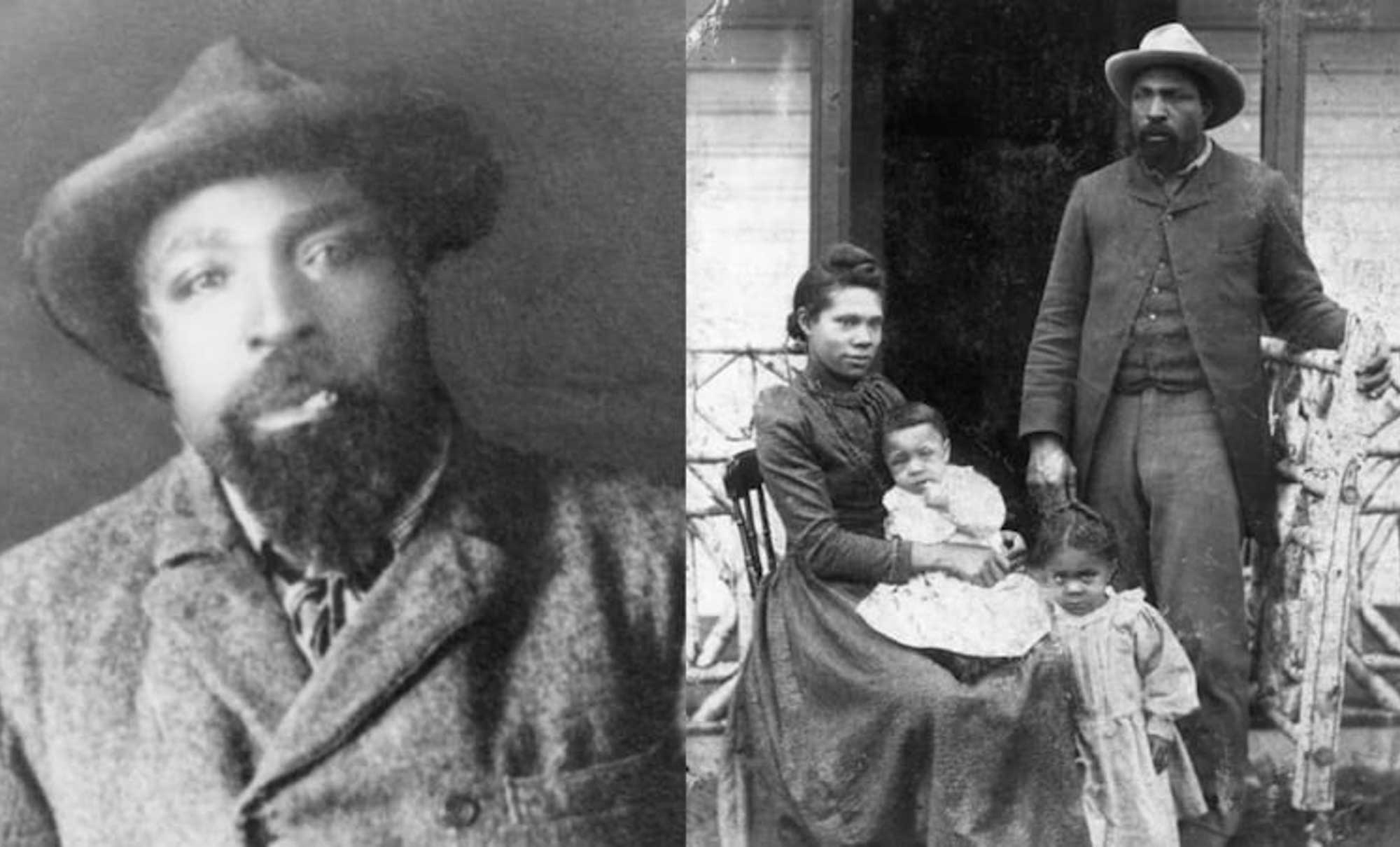
Widely regarded as Canada’s first Black cowboy, John Ware was born into slavery around 1845 in the southern United States. Following emancipation, he moved to Texas, where he found ranching work and in 1882 was hired to drive 3,000 head of cattle north to the Bar U Ranch in southern Alberta. He remained on the Alberta prairies and started his own ranch in the foothills, southwest of Calgary.
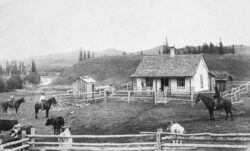
John Ware’s reputation and legend as Canada’s first Black cowboy grew over the following decades, especially after his passing in 1905. But little was known about what became of his ranch.
Then, in 2017, a team from the University of Calgary began archeological work to locate the homestead site. A team led by Dr. Lindsay Amundsen-Meyer discovered the home site this past summer and made a surprising find: two pairs of Levi Strauss & Co. buttons and rivets.
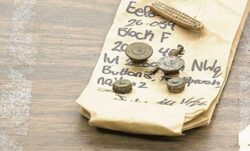
“[They were found] between the home’s cobble foundation,” said Lindsay, “right along where the wall of the lean-to should be at the back of the house.”
Where did John Ware buy his Levi’s® riveted overalls? We don’t know the exact location, but we do know it was somewhere in Canada. The Levi’s® Archives has advertisements from Canada’s Yukon region dating back to the late 1890s. We’re also not sure why the buttons were found in the foundation. The current theory is that the Levi’s® were used as insulation against the cold Canadian winters, a practice common in the American West in ghost towns like Bodie State Historic Park in Northern California.
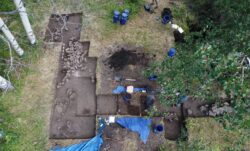
The John Ware discovery echoes another remarkable Canadian find from 2017. Archeologists excavating one of the earliest forts of the North West Mounted Police uncovered a pre-1890 Levi’s® rivet — evidence that Levi’s® products had reached even the most remote corners of the frontier. Together, the two discoveries show how widely Levi’s® garments traveled across North America during the nineteenth and early twentieth centuries.
More than 120 years after his passing, John Ware’s legacy continues to inspire. And thanks to a handful of copper rivets and buttons recovered from the ground beneath his ranch, we now know that Levi’s® was part of his extraordinary story.