From flea markets to family closets, artifacts find their way to the Levi Strauss & Co. Archives from all kinds of places — and they come with all kinds of histories. Some pieces arrive with full backstories, while others carry only fragments that hint at their past.
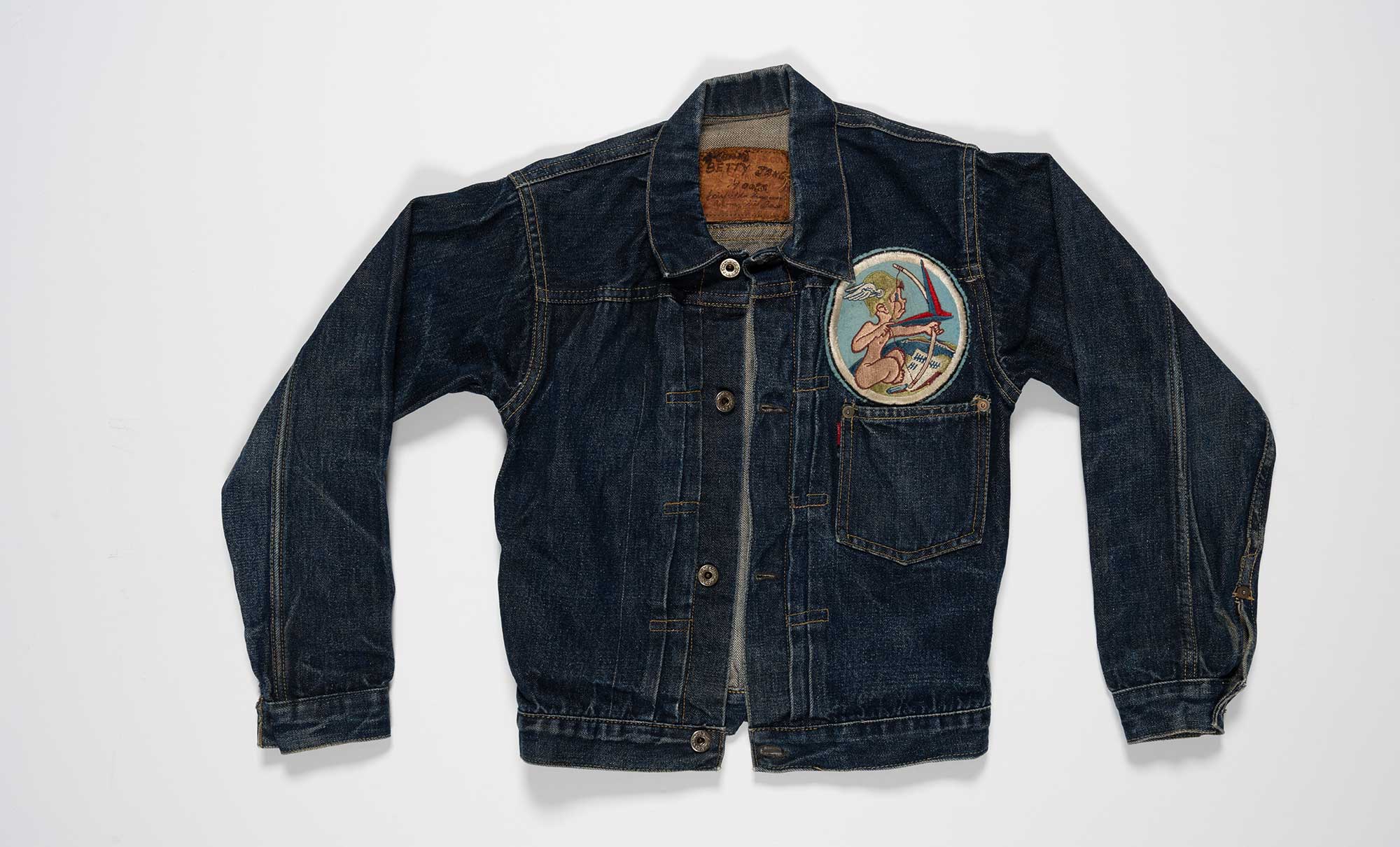
The Levi’s® jacket once owned by Betty Jane Moore falls into the latter category: a well-worn piece that hints at a life lived with purpose. In honor of Women’s History Month, here’s a look at our newest Archives acquisition that likely belonged to one of the many women who stepped into a role traditionally reserved for men.
From Auction to Archive
In December 2026, an LS&Co. employee tipped me off to an unusual listing on a Goodwill Auction site: a vintage Levi’s® jacket with a woman’s name, “Betty Jane Moore,” written on the inside collar patch.
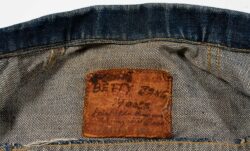
I checked out the listing, reviewed the photos and immediately wondered about Betty’s backstory. I knew I had to make a bid — and to my delight, I won the auction the day after Christmas.
Betty’s Levi’s® garment is a Lot 506 (or Type 1) riveted denim jacket dating to the mid-1940s. The brand’s first Type 1 jackets date to the early 1900s and were produced until 1952, but Betty’s jacket offered clues to a specific era. Distinctive features include:
- Laurel leaf donut buttons, a generic non-Levi’s® branded button used for metal rationing during World War II.
- A single front pocket without a flap, an accommodation required by the U.S. government to conserve material during the war.
- Visible wear patterns, including the indigo dye rubbed off at the collar — indicating the jacket was worn regularly rather than preserved as a keepsake.
Although we don’t know for sure, clues stitched and written on the jacket indicate that Betty may have had a connection to World War II aviation. The first hint appears beneath Betty’s name written in a firm, deliberate hand: “Fairfield Suisun Army Air Base,” a California military installation in the San Francisco Bay Area that opened in 1943 (today, Travis Air Force Base). During World War II, the base served as a major hub for aircraft ferrying in preparation for flights to the Pacific Theater.
Another striking detail on the jacket is the large 13th Air Transport Squadron patch sewn on the front. One can still make out the blue threads of stitching Betty used to attach it. The squadron was responsible for transporting aircrafts from the East Coast of the United States to Scotland before combat pilots flew them into war zones.
Taken together, these details point toward a connection to aviation work.
If Betty herself flew during the war, she would have been part of a remarkable generation of women who ferried aircraft, trained male pilots and kept wartime aviation moving — contributions that were essential yet often overlooked.
While the jacket offers many physical clues, much of Betty Jane Moore’s story remains undocumented, leaving the jacket itself as the most reliable witness.
Today, in its new home in the LS&Co. Archives, Betty’s Levi’s® jacket invites us to consider the lives of the many pioneering women who have played vital roles throughout history. In every crease and stitch, Betty’s legacy endures as another testament of a unique woman — a Levi’s® Original with a story of progress.