The vast majority of Levi Strauss & Co. products are made with cotton. We want to source that cotton sustainably, and we recognize that the farmers who grow it represent the very beginning of our supply chain.
That’s why we’re proud to share an early look at the Levi’s® Regenerative and Resilient Landscape Initiative (LRI), a new initiative we’re funding in Pakistan as part of the Regenerative Production Landscape Collaborative (RPLC). The LRI provides funding to the program initiated by WWF-Pakistan with support from Laudes Foundation, which covers one million hectares of land under multi-stakeholder partnerships in Brazil, India, Pakistan and Tanzania.
The LRI launched in January 2026 in Jalalpur Pirwala, in Punjab’s Multan district — one of Pakistan’s key cotton-growing regions. Over three years, the initiative will promote regenerative farming, restore ecosystems and support the long-term well-being of farming families across 10,000 hectares of agricultural land.
Why Pakistan, Why Now
Farmers across cotton-growing regions worldwide are facing mounting challenges, including soil degradation, water scarcity and increasingly unpredictable weather. At the same time, demand for responsibly sourced raw materials is growing.
These challenges are prominently at play in Pakistan, which is why the country is already a priority focus area for watershed restoration as part of our 2030 water strategy. Now, we’re rolling out the LRI to equip farmers with skills and tools to farm more sustainably while restoring the landscapes they depend on.
What sets this initiative apart is its “mini-landscape” approach. Rather than treating farming as an isolated activity, it recognizes that farmers, water systems, biodiversity and communities are all deeply interconnected. The program is designed with that whole system in mind.
While the initiative is still in its early stages, progress is already underway. As of March 2026, LRI has achieved several milestones, including:
- Engaging nearly 600 farmers through community meetings and awareness-raising sessions.
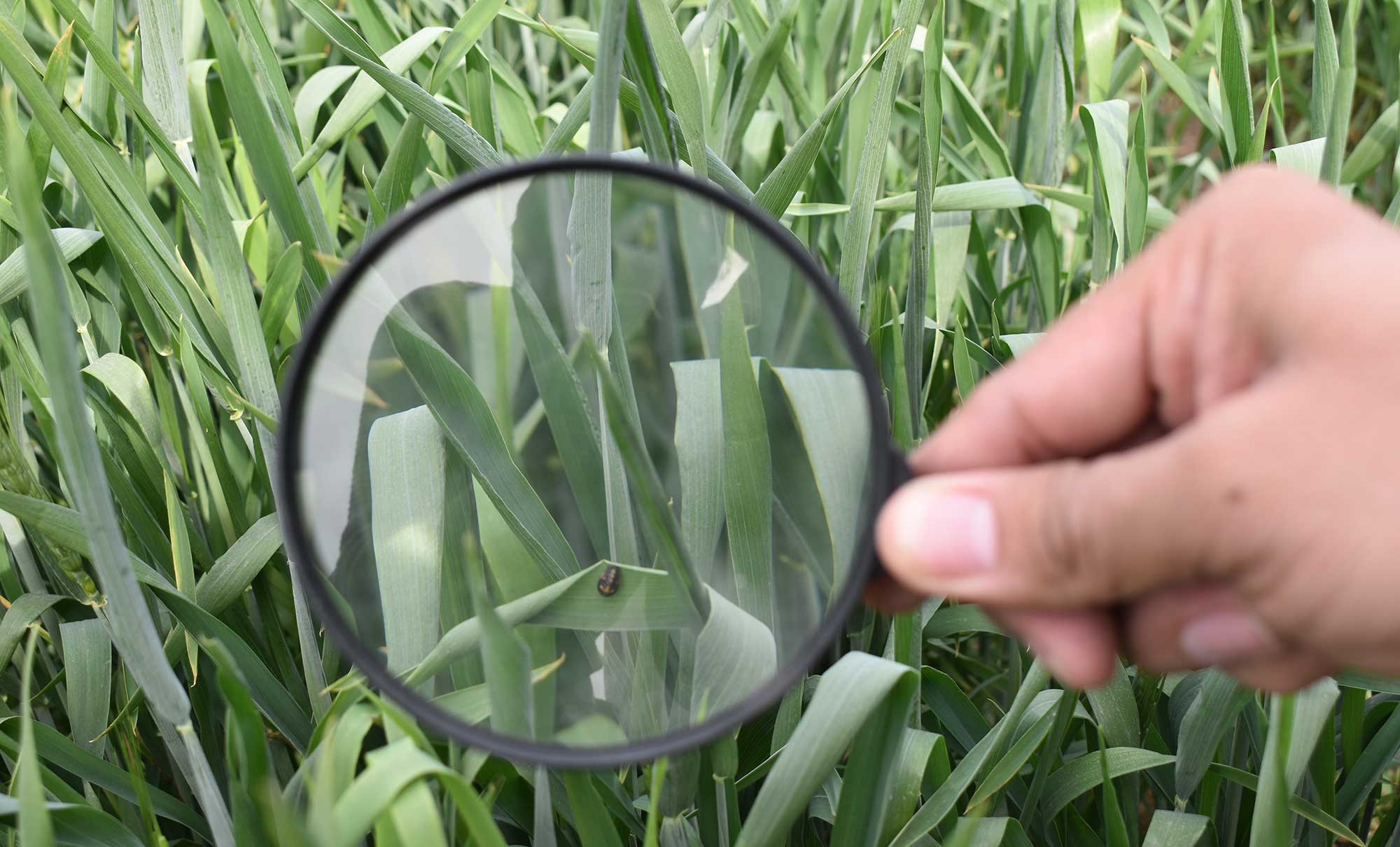
- Establishing 20 farmer field schools as hands-on learning hubs, with 165 farmers completing training on soil health and water conservation.
- Collecting 100 soil samples that are being analyzed to establish baselines for measuring future progress.
WWF-Pakistan also led a four-day “training of trainers” session for project staff at their Multan office, covering regenerative agriculture, soil health and water stewardship — helping ensure that those delivering the program are fully equipped to support farmers effectively.
What’s Next
The LRI’s goals are both environmental and human. By December 2028, the initiative aims to improve water productivity on farms, reduce synthetic fertilizer and pesticide use, increase soil organic matter and plant 100,000 trees to enhance biodiversity and capture carbon.
Beyond the metrics, the initiative is focused on strengthening economic resilience for farming families — lowering input costs, supporting climate adaptation and helping build more stable, sustainable livelihoods. Partnerships and policy engagement are another key piece. By working alongside governmental agencies and industry partners, the LRI aims to demonstrate what’s possible and encourage broader adoption of regenerative practices in the region to build landscape resilience.
Our Commitment
At LS&Co., we’ve long believed that how we make our products matters as much as what we make. That’s why we set our biodiversity goal to protect and restore the biodiversity found within our raw material footprint, like cotton, in significant regions by the end of 2030. Investments like the LRI are an expression of that belief and a reminder that sustainable supply chains aren’t built overnight — they’re built relationship by relationship, field by field, season by season.